Alabama State University is moving forward with delayed renovations and deferred maintenance projects to bring historic buildings back into use and prepare the campus for future growth. In an interview, Vice President for Facilities Management and Operations Donald Dotson detailed ongoing work at Friendship Manor, Beverly Hall, Trenholm Hall, the Acadome, and other facilities.
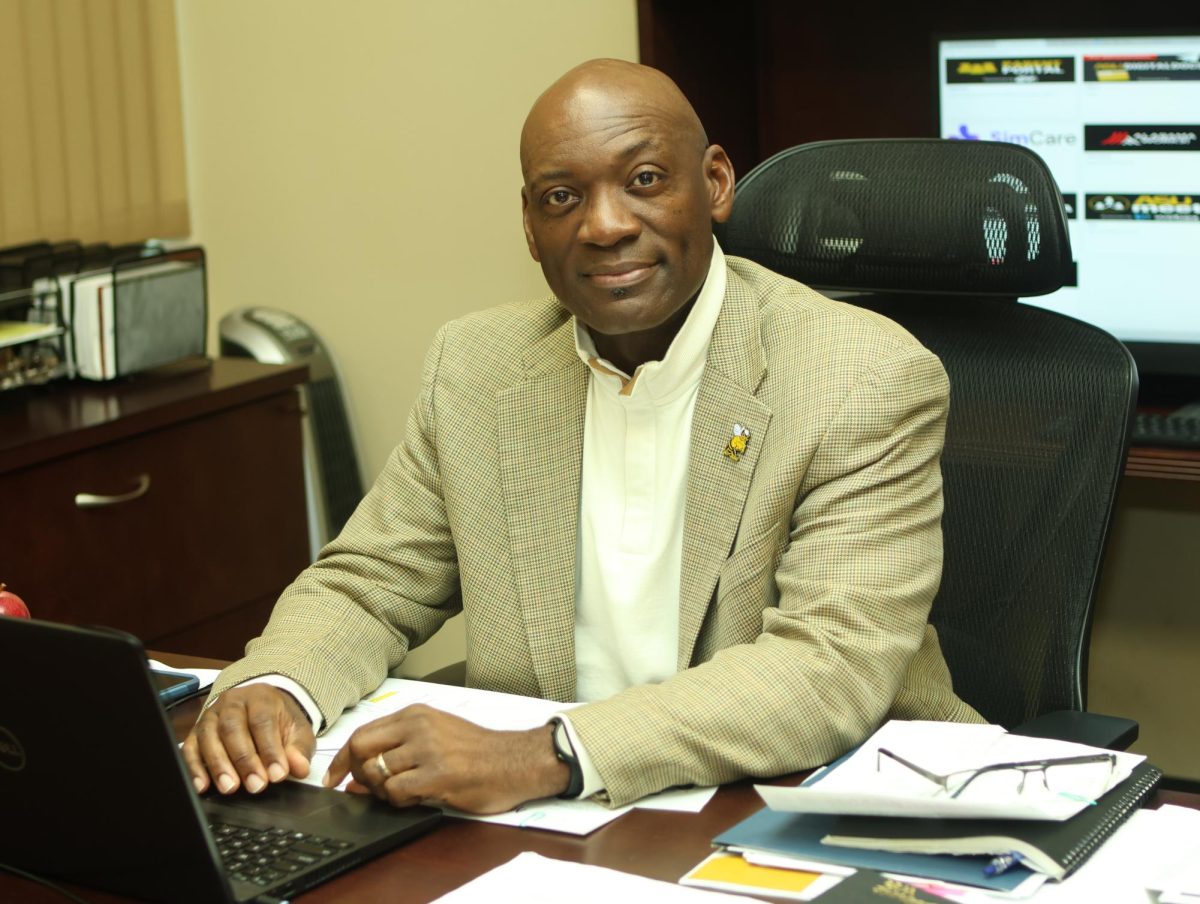
Dotson, who began his tenure on June 4, 2018, oversees construction, operations, transportation, grounds, mail services, and inventory. He previously worked for Montgomery Public Schools, but he said the demands at the university are far greater.
“In K-12, the day ends at four or five o’clock,” Dotson said. “Here, it is twenty-four hours a day, seven days a week.”
Friendship Manor, a two-story building located across the street from the Vaughn College of Business Administration, is one of the projects that is closer to completion. The building, which once served as the president’s home and later housed vice presidents, has been offline since 2002. Dotson said the last administrator to live there was Roosevelt Steptoe, Ph.D., who served as vice president of Academic Affairs.
“We are trying to do the same thing with Friendship Manor that we did with Beverly Hall, bring an offline building back online because we need the space,” Dotson said. “When we did a full scope of the building, we found mold and lead-based paint that had to be addressed. That remediation just finished last week.”
According to Dotson, plans call for keeping the original floors, installing new sheetrock, adding new siding and a new roof, and converting the house into offices, restrooms, and a break room for staff tied to new programs and grants. He noted the old garage behind the house was modified to create additional parking. Because the structure is historic, work proceeds with required approvals from the Alabama Historical Commission.
Dotson said John Beverly Hall presents serious challenges. The building has been closed for more than a decade after water intrusion caused mold to spread throughout the various floors within the building. When Dotson arrived, the building had a new roof, windows, and mechanical systems, but years of moisture damage had already rendered them useless.
“We went into the project thinking half a million would take care of it,” Dotson said. “It turned into two and a half million because every time we opened up a wall or floor, we found more problems.”
Remediation alone costs nearly $1 million. Dotson said the team addressed roofing issues, repaired gutters, and cemented the entire courtyard with a slope and drains to direct water away from Beverly Hall and nearby Lockhart Hall. During the process, workers also discovered collapsed pipes stretching under Council Hall, which were replaced.
He mentioned that the basement of Beverly Hall is being redeveloped into a new health center and is expected to open in November. Dotson said deferred maintenance funding tied to the construction of the new student apartments allowed him to budget for the first and second floors, which he expects to complete within six to eight months. Architects drew plans in advance so that construction upstairs will not disturb the health center once it opens.
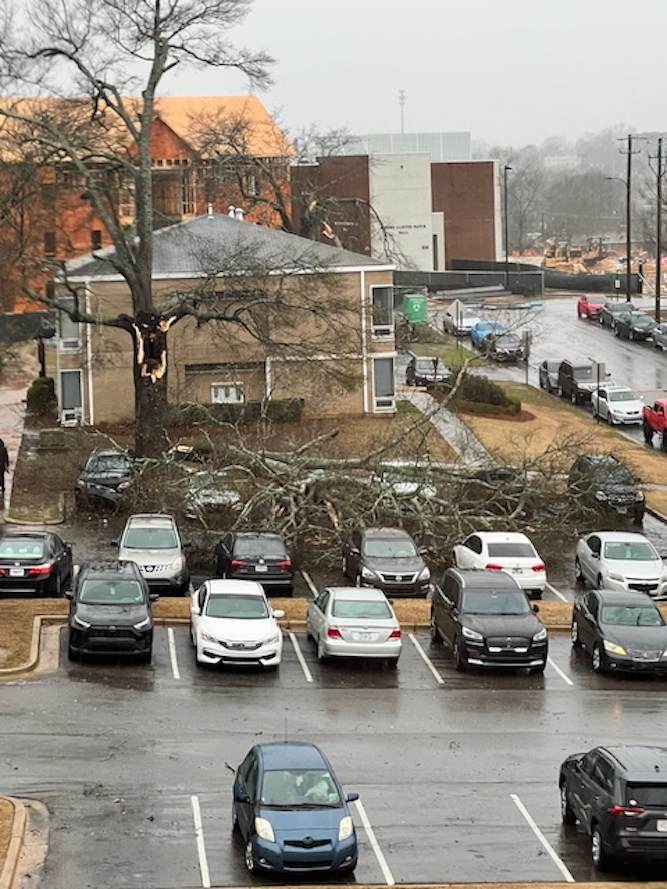
George W. Trenholm Hall also required major repairs. Dotson said the roof caved in several years ago, forcing the university to vacate the building. The cement-block structure was reroofed, but during construction a storm damaged the flat roof and left additional problems, including serious damage to Room 200.
“The late Derryn Moten Ph.D., helped secure a $500,000 National Historic Landmark grant, and the university added money to it,” Dotson said. “With that, we redid Room 200, several other classrooms, and the bathrooms.”
He said air conditioning units are being checked before the building reopens. In addition, a separate grant will fund upgrades to the auditorium. Dotson said design work is underway for new seating and flooring, and the project is expected to go out for bid in the near future.
According to Dotson, the Dunn-Oliver Acadome is also scheduled for improvements. Dotson confirmed that new seating will be installed with completion expected by Oct. 13, 2025, replacing worn chairs and providing more space for major events.
“The new seating will give us more room when we host the gala and other floor functions,” Dotson said.
Alongside these projects, he announced that two new apartment-style residential complexes will be built on University Drive and Forest Avenue. The $75 million project, scheduled for completion in early 2027, will add 268 beds on University Drive and 248 beds on Forest Avenue. The Forest Avenue complex will also include a café with a full kitchen and grab-and-go options.
To make room for the University Drive site, the Cynthia Alexander Apartments will be demolished, limiting parking near Robert C. Hatch Hall and surrounding lots.
“We are looking at alternative parking because we do know that is an issue there,” Dotson said. “The students here today may be inconvenienced, but they are setting a legacy for students in the future.”
Dotson added that these new residential spaces are designed to help with enrollment growth and to relieve the strain of housing shortages, which left some students on waitlists this fall.
“I think the trend across campuses across the U.S. has gone more to apartment style,” Dotson said.
Other campus projects include replacing the HVAC system in Harper Council Trenholm Hall, which failed during the summer, and installing a new roof on Abernathy Hall. Additional funds will shape how quickly these projects move. Alabama public works law requires competitive bidding and awards to the lowest responsible bidder, Dotson said. He cited a roof package at Fine Arts and Council Hall where an unusually low bid led to poor performance; the university now vets bidders carefully.
Dotson added that routine care can prevent problems.
“Moisture allows mold to grow,” he said, “and residents can help by drying showers, reporting leaks, and avoiding damage that diverts maintenance dollars.”
Dotson said the goal is to keep the university’s history alive while preparing facilities for the future.
“We want to keep our history alive while making sure students, faculty, and staff have the space and resources they need,” he said.