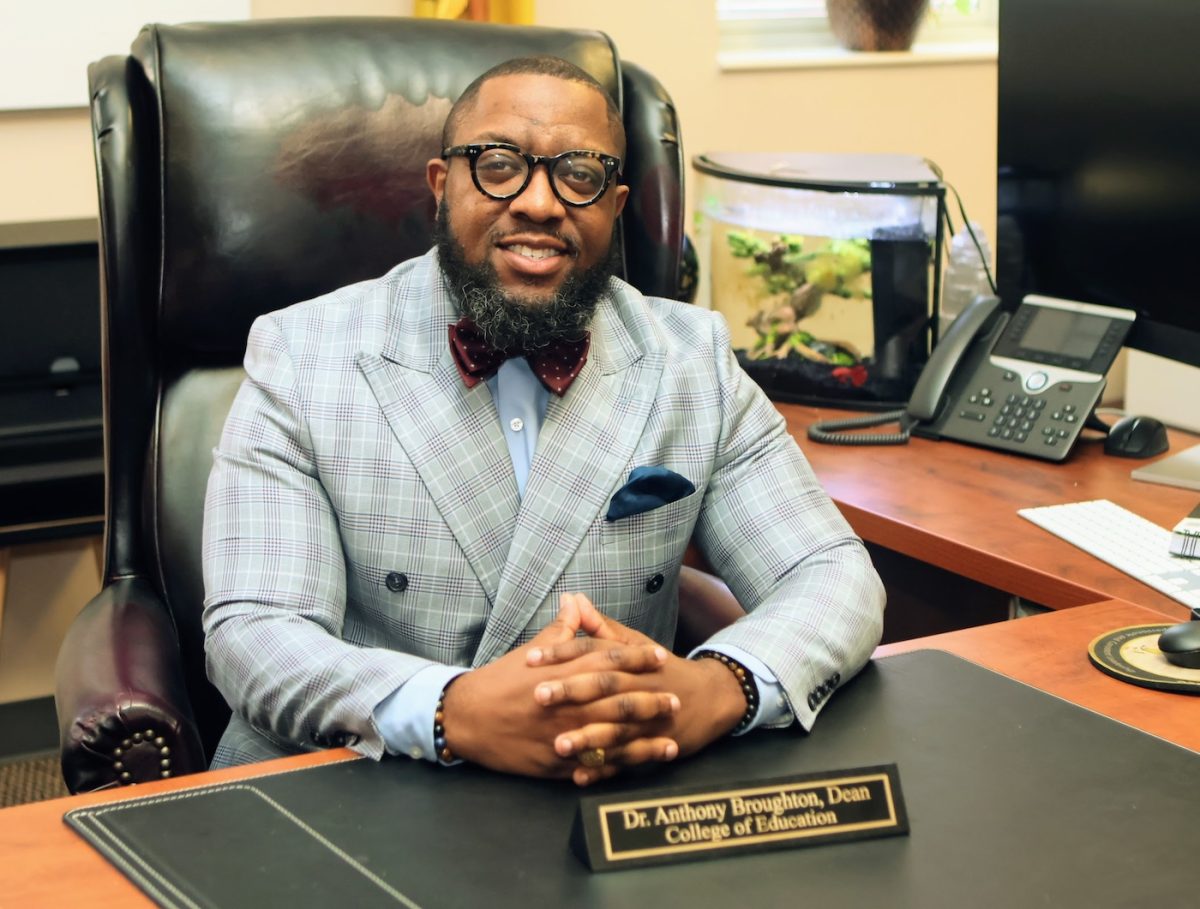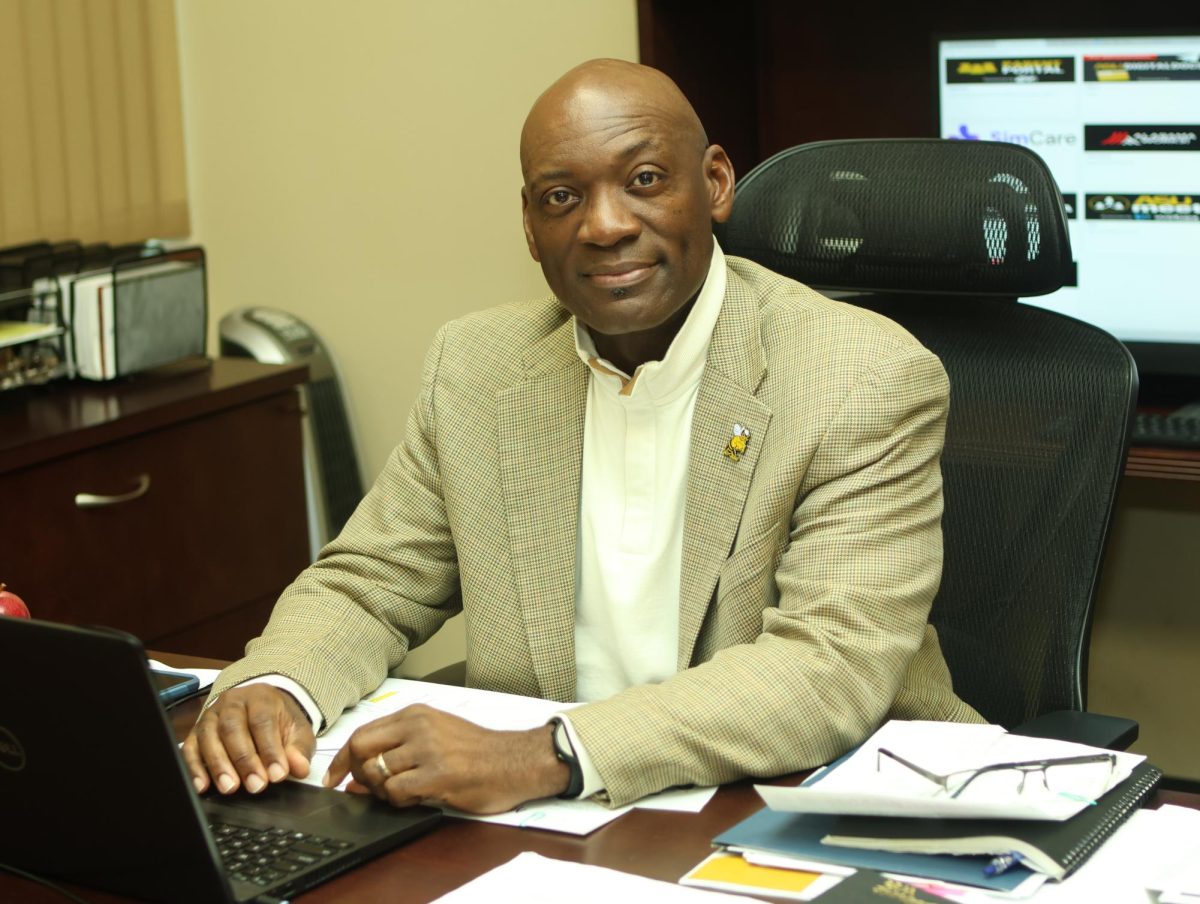
Alabama State University appointed Willie S. Rockward, Ph.D., as dean of the College of Science, Technology, Engineering and Mathematics on Jan. 5. He spoke candidly on Feb. 9, in the Life Science Building about his background, ongoing challenges in STEM education, and his expectations for faculty and students.
Rockward does not define leadership in terms of authority. Instead, he describes it as responsibility.
“In STEM, progress does not happen in isolation,” Rockward said. “Departments overlap. Research overlaps. People overlap. Working together is not optional.”
He acknowledged that he had served in unofficial “dean-like” roles for much of the past decade, often acting as a connector across departments by aligning research interests and fostering collaboration among colleagues. That work, he said, long predated his formal appointment.
“That process preceded this title by years,” Rockward said.
A Louisiana native, he earned his undergraduate degree from Grambling State University, completed graduate studies at the State University of New York at Albany, and earned his doctorate from the Georgia Institute of Technology. He began his academic career at Morehouse College in 1998, where he spent more than 20 years as a faculty member, serving seven years as chair of the Department of Physics and the Dual Degree Engineering Program and directing the Materials and Optics Research & Engineering Laboratory. He later served at Morgan State University as chair of the Department of Physics and Engineering before coming to Montgomery.
Rockward said joining the university was not a sudden decision.
“At this stage of my career, it is the impact that counts,” he said. “I wanted to be of use to others.”
Rockward addressed faculty composition within STEM programs, particularly at historically Black colleges and universities. He said hiring practices over time have shifted in ways that created an imbalance.
“International faculty bring valuable perspectives and expose students to global viewpoints,” he said. “But balance matters.”
He added that students need to see themselves reflected not only in classrooms, but also in leadership roles.
“Equity is about balance, not replacement,” Rockward said.
Retention remains one of the most significant challenges facing STEM programs, Rockward said, noting that enrollment is not the primary issue. Preparation, he added, is often the determining factor.
Rockward identified three elements critical to student success: desire, preparation and finances. Students missing one of those areas can often be supported, he said, but missing two or more creates a much steeper challenge.
“I can help you find money,” Rockward said. “I can help redefine preparation. But I cannot supply work ethic or desire. That must come from the student.”
He also pointed to financial literacy as an often-overlooked barrier.
“Some students lose aid not because resources are unavailable, but because those resources are poorly managed,” he said.
Rockward described his mentorship style as direct, emphasizing accountability when referring students to internships or professional opportunities.
“If I open a door for you, I expect you to perform,” he said. “And when you get there, I expect you to return and support the next student.”
Rockward said he plans to share a long-term vision for STEM by the fall semester. For now, his focus remains on listening, assessing and understanding the existing culture.
“I am still learning,” he said. “But I believe very strongly in where this program can go.”