On Oct. 14, Indiana University fired the Indiana Daily Student newspaper advisor, after he refused to censor student reporting. The firing did not just remove a staff member; it crossed a line that threatens every student journalist in this country.
According to the Associated Press, the university dismissed Jim Rodenbush after he refused to publish news stories from the Indiana Daily Student’s homecoming print edition. The Guardian reported that administrators instructed student editors to publish only promotional content, not actual news. Inside Higher Ed confirmed that the university then ordered the paper to halt its regular print runs and operate under a digital-first model that editors say was used to pressure them into compliance. Free-press advocates, including the Student Press Law Center (SPLC) and the FIRE, called these actions a “textbook case of censorship.”
This is not an isolated conflict in Bloomington, Indiana. This is a test of whether student journalists, anywhere, can do the work they are trained and obligated to do. If a public university can silence its student press because it dislikes or disagrees with its coverage, then no official student newspaper, no matter its history, mission or audience, is safe.
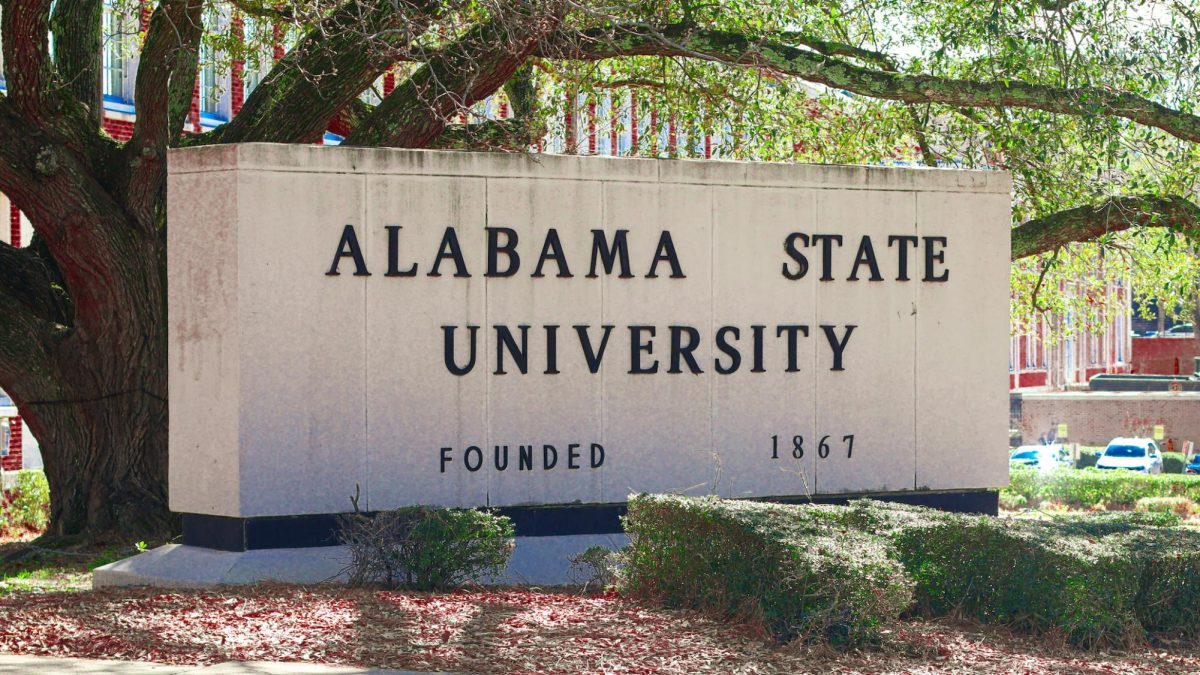
The Alabama State University community knows the weight of having a voice in spaces where voices have often been ignored or dismissed. As a historically Black institution, faculty, staff and students understand what it means to fight for the right to tell our stories. We have lived it. We have inherited it. And we stand in it every time we publish an issue of The Hornet Tribune.
Student newspapers are practice grounds. We do not report and write in simulations. Student newspapers prepare student journalists for the world of professional journalism. We report in real time about real lives. We cover government shutdowns, campus safety, financial aid delays, mental health struggles, crime, sports and the experiences of students whose stories are overlooked.
Student journalists play a vital role in informing their fellow students about campus events, serving as a check on the university’s administration, and uncovering stories that outside media might miss. They are often the first to expose the issues others would rather hide such as crime, sexual assaults, inadequate facilities, administrative failures and, etc. That is journalism. That is service. We document the truth for a community that deserves honesty, not convenience.
That responsibility is sacred, and that freedom is fragile, as pointed out by the U. S. Supreme Court and appellate court rulings over the last 50 years in cases such as Antonelli v. Hammond, Dickey v. Alabama State Board of Education, Schiff v. Williams and Kincaid vs. Gibson/Kentucky State University.
The attempt to suppress student journalism at Indiana University is a reminder that censorship does not always arrive in obvious forms. It can come disguised as “financial restructuring.” It can arrive through “print model changes.” It shows up as advisors being asked to choose between their jobs and their integrity. Censorship moves quietly, at first. A request to “tone down a headline.” A suggestion to “consider optics.” Then, suddenly, a directive: “Remove that story.”
Censorship is a slow erosion. Then it becomes a landslide.
The Hornet Tribune staff stands with the Indiana Daily Student newspaper staff and its advisor because their fight is our fight. We stand with Jim Rodenbush because he chose constitutional principles over his salaried position. We stand with the student journalists of the Indiana Daily Student newspaper staff who will enter this profession already understanding what many seasoned reporters had to learn the hard way: truth has a cost.
To silence that is to silence democracy.
If a university is uncomfortable with its student newspaper telling the truth, then the problem is not the newspaper. The problem is the truth. And if one student newsroom can be punished for doing its job, then every newsroom is one administrative decision away from being shut down.
This is the moment for all student journalists to understand their worth and their duty. We do not exist to protect institutions. We exist to serve the people who read us. And we refuse to hand our voices to anyone who hopes to rewrite our stories for their own comfort.
The Hornet Tribune stands with Jim Rodenbush and the staff of the Indiana Daily Student because we stand for truth. Without it, none of us has anything worth printing.