At Alabama State University, we are taught that knowledge is power. That lesson does not stop at our campus. It reaches every college in Alabama and every university across this nation. But what happens when the right to speak, to question, and to tell the truth is taken away? Without free speech and a free press, that power disappears. Students, faculty, and staff everywhere lose the ability to grow, to challenge injustice, and to shape a future that reflects their values.
Free speech is the right to express your thoughts, beliefs, and opinions without fear of government punishment. Free press is the right of journalists and publications to investigate, report, and publish information without being silenced or controlled. These rights are written into the First Amendment of the United States Constitution, but what is written on paper can be eroded in practice. When voices are silenced or punished, those freedoms begin to slip away.
On September 10, political commentator Charlie Kirk, founder of Turning Point USA, was shot and killed while speaking at Utah Valley University, according to the Associated Press. His topics were crass and hard. He spoke about gender identity, mass shootings, and gang violence in ways that some felt cast Black and brown communities in a negative light. I had the opportunity to speak with students on campus and listen to how they felt. Many people felt that Kirk was a racist.
I asked if it was that simple, or if he was simply a man who believed deeply in his people and his convictions. Was that not his freedom of speech? Even if we did not like his words, was he not entitled to say them?
The same tensions spilled onto our own campus, the university went on lock down after receiving a bomb threat, according to The Guardian. President Quinton T. Ross Jr. confirmed that the university had received a terroristic threat and operations were suspended as a precaution. The university was locked down not because of what we said, but because of the retaliation that followed Kirk’s death.
Even national figures faced consequences; ABC suspended Jimmy Kimmel Live after Kimmel’s remarks about Kirk’s death drew backlash. Affiliate stations under Nexstar and Sinclair stopped airing the show, and the chairman of the Federal Communications Commission warned of regulatory consequences, according to Reuters. A late-night host with a national platform was taken off the air for speaking freely.
All of this raises a bigger question: What happens when even speaking about death feels dangerous? We watched a political figure being gunned down. We saw a national TV host pulled from the air. Our own campus was locked down after a bomb threat, and in the middle of that climate, more tragedy followed.
Demartravion “Trey” Reed, a 21-year-old student at Delta State University in Mississippi, was found hanging from a tree on campus. Days later, Cory Zukatis, 36, was also found hanging from a tree in Vicksburg, Mississippi. Two men, two trees, two unanswered questions. And yet even talking about their deaths feels like stepping into forbidden territory.
If we cannot name these moments, if we cannot write about them, if we cannot ask the hard questions, then what does that mean for free speech? What does that mean for free press?
In Alabama, the pressure is already real. Faculty and teachers are under review for social media posts about Kirk’s assassination. WSFA reported that State Superintendent Eric Mackey warned districts that those posts were “inexcusable” and could violate the Educator Code of Ethics. The outlet 1819 News reported that at least three educators are facing investigation. The American Civil Liberties Union of Alabama condemned what it called attempts to punish educators for exercising free speech.
I cannot help but ask, if educators can face discipline for words expressed on personal accounts, what message does that send to students across Alabama campuses?
I ask myself further, if professors are silenced, how long before student journalists are told to keep quiet?
This is what erosion looks like. Free speech is not lost in one sweeping law. Free press is not destroyed in one midnight raid. These freedoms slip away piece by piece. They slip when a host is taken off the air. They slip when a professor is investigated. They slip when a campus is silenced by fear.
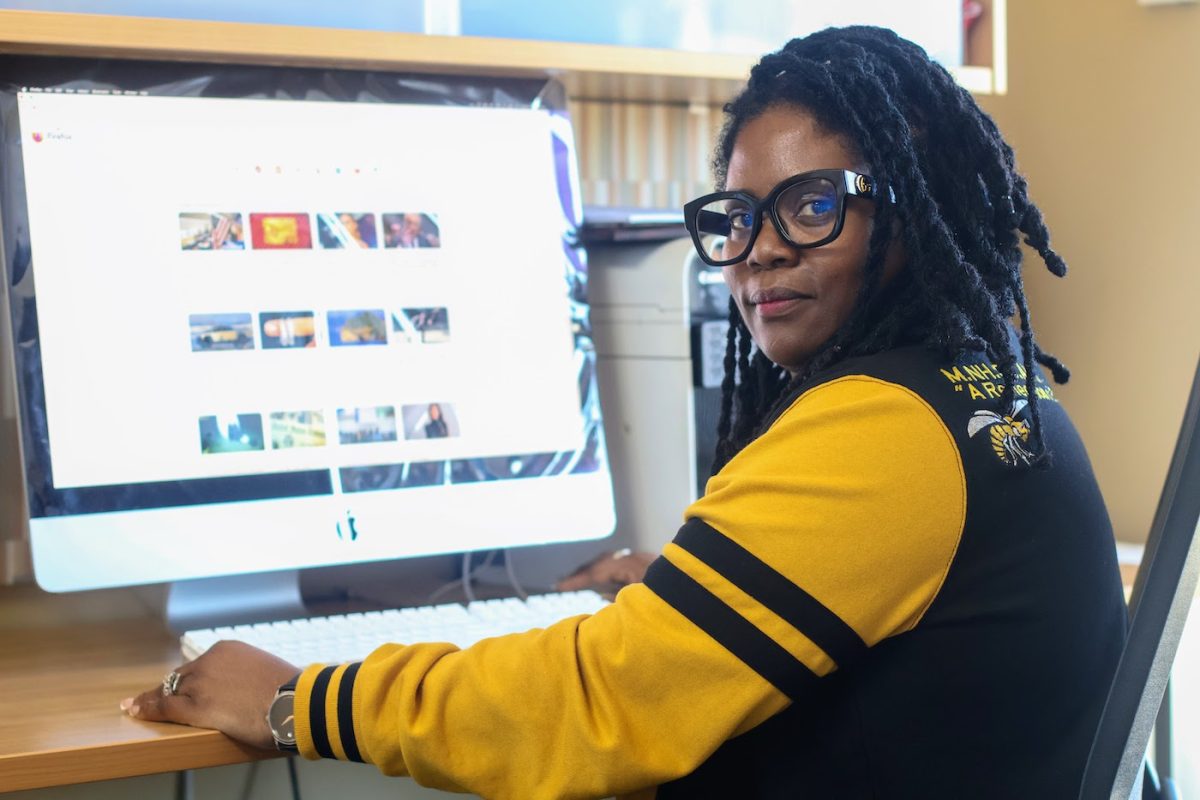
As Editor-in-Chief of The Hornet Tribune, I know what is at stake. Free press is not a luxury. It is accountability. It is why injustices like Reed’s death are noticed, why communities demand answers, and why universities must defend students who speak up. The university was founded on courage, by men and women who faced violence but spoke anyway. That legacy belongs to us now.
Free speech and a free press are how we stay free. If we do not learn what those rights mean and defend them now, we will soon be told what to say, when to say it, and how to live. That is the road to a dictatorship.